By Matthew Ujah-Peter
First, I’ll tell you a story that I don’t mind telling a thousand times over. I was only then a boy of about nine and was in a company of boys about my age. Some were about two or three years older. We all headed to one of the most popular streams in my little town. It was that season of the year when water levels were high. Everyone removed his cloth and jumped right into the stream. It looked so easy. After all, there can only be a few things they could do that I couldn’t. I joined in. No sooner did my body hit that water than I began to struggle for survival. I was drowning. But thank God for one or two of them who quickly noticed that I didn’t know how to swim. In a few minutes they all joined hands and rescued me. I felt bad and ashamed of myself. Though, I can’t now remember any of them making any serious fun of me for my inability to swim. A few weeks and months later, I was swimming like everybody, having learned the tricks afterwards.
Over the years, I have become a bit suspicious of what everyone refers to as common sense. Common sense is acquired from the use of the five senses: smell taste, touch, sight and sound and passed from generations to generations, many of which may be just myths. Some are offshoots of superstitions. This is not to discount cultures and values. But I agree with Malcolm Gladwell, when he says in his book, Outliers, that ‘’the culture we belong to and the legacy passed down by our forebears shape the patterns of our achievement in ways we cannot begin to imagine.’’
Only a few dictionaries would define common sense without using the phrase ‘'sound judgement'’. But the degree of soundness of any judgement is predicated upon the depth and quality of the culture and values behind it. As common as common sense is believed to be, look at what we do every day to ourselves, to others and to our environments. Our daily life's transactions with fellow humans, environments and circumstances of life are all largely based on (or are supposed to be based on) common sense and it is the base on which core values and cultures are formed , even as core values and cultures, also in turn, form the base for common sense, and herein lies my suspicions.
Common sense becomes limiting with a phenomenon I wish I could call '‘the knowledge of evil'’ or ’'the evil of knowledge,'’ whichever way you decide to look at it from. I often wonder if this is not the same thing the Scriptures refer to in Genesis chapter 3. But be it as it may, fear and its power come from what we know and also, from what we don’t know and this is what I call the knowledge of evil or the evil of knowledge.
The Paralysing Power of Fear. Back to my story. Why did I sink? I sank because of the force with which I hit the water with my entire body weight. But why did I almost drown? It was because I didn’t know that my body could float on water. So the moment I found out that my legs weren’t touching the ground as it was used to and because I didn’t have a clue as to how to stay above the water, fright and panic took over my judgements. Did I know better? My ordeal that day were the results of both what I know, namely, that I was in trouble (and who told me that I was in trouble, anyway?) and also what I didn’t know, which is that I can float on water if only I was fearless.
So, while learning how to ride bicycle and also while learning how to swim later on, my confidence and fearless dispositions came gradually from the knowledge as to how to do it. But how I have often wondered: how or why is it that animals don’t have to learn how to swim? But human being must learn how to swim? As children, we played with puppies and each time we throw them inside the stream, they swam effortlessly. Even mice swim without hitches. So does dead bodies of human beings. Could this be what the knowledge of evil (or the evil of knowledge) is, and does to mankind?
Over the years, I have read quiet a number of books that address fear. In the same token, I have also listened both live and on tapes/CDs, to great teachers and speakers who had offered great insights that have helped me cut that monster called fear to size. While I cannot claim, as at the time of writing this, that I have fully conquered all known fears, my present victory over my secret fears plus insights gathered over the years gives me some level of qualification to teach others a thing or two on how to conquer this monster. No one is exempt from fears. But with appropriate knowledge, we can get a good handle of it. Please, note that fear an impulse just like anger. Excessive anger can damage things just as excessive fear. (We will discuss anger Under Emotional Intelligence for Leaders in a different post).
Many definitions of fear have being given. One is the acronym: F-false E-evidence A-against R-reality. Another very similar one is (still with the use of acronym): F-false E-evidence A-appearing R-real. This use of acronym is a brilliant way of making it stick to the memory and though I have known this definition since my early twenties, I do not want to take them for granted, for they are true. Fear is fed by wrong cultural beliefs, others’ mistakes and misfortunes, rumours, bad news, personal failures, pains, etc. These are knowledge that we have acquired over the years on life’s journey. But is fear bad on its own? Doesn’t fear also help us a good number of times to avoid dangers?
The Power of Knowledge. On my primary school badge was the inscription as our motto: ’’Knowledge is power’’. But what did I know about ‘’power.’’ Well, as a grown man, I now know of no other weapon with which to crush fear as I have known of knowledge. As a boy, I used to fear dogs with certain colours of brown-black stripes, thinking they are mad dogs. The first time I was told of a mad dog, it was a dog with same colour. In fact, that particular colour is not even homely for a dog, in my judgement. Till date I still dislike dogs of such colours. But the fear that they are mad is gone with the knowledge that it is not madness that gave them such colour.
Courage is Not a Denial of Fear. But it denies fear of its power to rub you. Also, courage is not an absent of fear. It is having a more superior reason to confront what you fear. If a man wants to save his child from a fire outbreak, the value of his child surely will supersede the fear of fire and give him such courage that will dwarf the feeling of fear. Ironically, greater fear also does supply courage to over current one. A major propelling force in a leader is the force of courage. Courage in the face of fear. The man who leads is the man who‘s bold and audacious enough to step out of the crowd, and this takes courage. Courage, even when fear seems to be breathing down his throat.
But What Really Is Fear? Fear, in reality and in general, is an alarm. Just like the feelings of hunger, anger, bodily pains, emotional shame, etc. These things are there to help us be alert, alive and about things that are our ‘’response –abilities.’’ Without the feeling of shame who will dress up, dress well or behave well? Without the feeling of pains, who will know when fire is burning up his body part he didn’t see? Without the feeling of anger, how would one show strong disapproval? Without feeling hungry, who will eat? And without feeling of fear, how can one be alert and prepared against threats or danger? Needless to bore you with the scientific explanations about which experts had said that the adrenaline which the feeling of fear helps send through our systems is very useful to give the entire body the ‘wake-up call to action’. Since I’m not an expert in that field, I will go no further there.
This alarm that goes off signalling an approaching threat or ’'danger'’ is normal. This is the process that sends the needed messages to our bodies and mental faculties. We know danger only because the feeling of fear is in us. Again, take pains for example. Without the feeling of pains, we would bleed or be sick to death without knowing something is wrong with our bodies, wouldn’t we? Pains and feelings are signals, so is fear. Beyond that, it becomes obsession or phobia which is an irrational fear. If what causes the signal – which is usually picked by either one or more of the five senses - is worth a fight or a flight then one must do accordingly. But, how do you distinguish between the two if adequate knowledge is lacking?
The more wrong information or adequate knowledge one has, the more paralysing the feeling of fear becomes. Whether or not a person will function on the bases of the alarm on the full stretch; whether the so-called danger remains a danger or not, is dependent on the person’s knowledge about that thing. When we pick up a sound of approaching footsteps in the darkness and/or in a lonely place, our brains can only interpret it based on our frames of reference. What do you interpret that sound to mean in connections with the environment and the situation of the moment? And what do you know about that sound before now? The more the ignorance or the wrong idea you already have, the stronger and tighter the grip of fear. Fear is fed and grows into a monster by wrong mindset and the wrong information as well as lack of good or full information.
Again, to understand fear one must understand that fear, at its primary level, is only a fright. Fright is an impulse. While a baby may not have fear in the real sense of the word, for they have no knowledge, they have frights and so do animals. They shudder at the instance of sudden loud sound such as dropping objects or an adult yelling suddenly around them. This is natural alarm. But with adequate knowledge babies overcome it as they grow. As for the animals, though they have frights, wrong information have no access to them or rather, they have no access to wrong information and so, they swim without going through swimming classes.
The Cure? All we have discussed already is a good cure of fear, excessive fear I mean. For fear itself, as we have learned, is one of the many types of equipment in us. Fear can’t be removed entirely, for it helps us detect an approaching threat or danger. It‘s excessive fear that paralyses us that must be removed and that by adequate knowledge and reasons to be more courageous. The Feeling of fear, like feelings of anger, pains, shame, weakness, fever, etc., is an announcement of approaching something. But, how come even what we hear, truth or falsehood, also sends fear down our spines? It is still a signal, nonetheless. Whether that falsehood influences our actions afterwards or not is a function of adequate knowledge. One of a leader’s top characteristics is bravery. Bravery is not blind courage, but a confidence that comes right from the reservoir of knowledge within and superior reasons.
MAXIMUM RESPECT!
Friday, 15 July 2016
Monday, 11 July 2016
THE LEADER (2): Be Not Afraid of Their Faces
By Matthew Ujah-Peter
I have taken part in officially organised plays only twice
in my entire life till date. The first one was in my primary school, in which I played
a very, very minor role, during our send-off
party after our First School Leaving Certificate Exams. I still wonder why I
had to be a part of that play. I don’t remember saying any important line that
day. The second one was a French
language play in my junior years in high school and I played the lead role. I
wasn’t picked for the role because of any particular acting talent I had, but
only that I was a better French language student. 'Monsieur Adesanya', our French
teacher, whose classes I indeed enjoyed in those days, happened to be the
writer/director of the play. But for his constant and tireless drilling,
shyness would have had the better part of me. Even though rehearsals went on
for days, I couldn’t reach the peak of my confidence. But on the day of the Lagos
state French education event in which we were to participate, several schools, including ours, weren’t called up due to lack of time. Thank God for that
‘miracle’, because while I counted down to our turn to perform, I was still
working on myself convincing myself that I could act on that stage in front of
the crowd.
Whether it is a drama presentation, speech making or recitation
before an audience, facing an audience to deliver or make a presentation is
still a daunting task today for even professionals. Especially, if the audience
is not one you are used to, say your church, club, class, etc. But of course, one’s
level of confidence soars with the passage of time.There's still butterflies
in most public speakers’ bellies each time they face new audiences. A common
advice, for those starting out in public speaking, is to look over the head of
the people, possibly at the wall opposite you which is behind them. Additional
helpful tip is to quickly scan the audience in search of a person whose face
look friendly and/or interested and connect with him or her temporarily as if
you are discussing with him/her and then switch over to another till you can
make more friends in the audience.
While this may not come very, very easy at the beginning, it
is a good way to go because, I tell you, there are certain faces in some
audiences that are very intimidating. So terrifying are some of the faces that
it sometimes might seems as though they came just to terrify you. They hardly
smile, laugh or even nod their heads slightly, no matter how funny, interesting
or profound you might think you are sounding. You think you did your research
and prepare very well nights and nights to climb that stage to speak till you
encounters those faces. Sometimes you would want to quickly finish your speech
and run away that if you aren’t careful, you will skip so many lines in your
power points.
This is one reason why professional speakers usually start
their speeches with an interesting story or a joke to break the ice. A few
tricks work to win total stranger and bring apathetic members of audience to
your side than this one.
But thank God, I started out my public speaking from
church setting where we were coached to take cover under the help of the Holy
Spirit. Yeah, I know. This is not every one’s cup of tea, but it works, big time.
You might have other explanation as to how or why it works, but thank God, it
works. As I once described it to a friend, it was as if we were injected with steroid and let loose. After my life in the Spirit Seminar in the Catholic
Charismatic Renewal group and hands were laid on me, I lost all fears of facing
the crowd. As a young man in my late teen and early twenties then, I used to
tell those whose listening ears I could secure that I can speak to any audience,
including the United Nations general assembly. And they were kind enough not to
argue, at least not to my face.
Why did I go this length and what am I talking about? I have
heard people told me not to care or worry about what people say in matters that
required taking an unpopular stand. They would say, ‘’so, you are bothered by
what people say?’’ or ‘’why do you care about what people say about you?’’ How
many who say that really stand their ground when the push of societal and
family pressures comes to shoves? How many can defy ‘’cultural law of gravity’’?
How many can truly stick to their guns in the face of stormy oppositions? Even
God recognises the devastating effects of standing alone apart from or against
the majority; hence He had once admonished one of His prophets thus:
'' Be not afraid of their faces: for I am with thee to deliver thee, saith the Lord.'' - Jeremiah 1:8 (KJV)
And it is from this advice that I took the title to this
message under this leadership series. By using the example of the speaker and his new audience, I mean not to
imply that the speaker is opposed to the audience or vice versa. But it is
similar to the initial tension and lack of connection that exist between those
who challenge the status quo and dare to
offer new ideologies and ways of
thinking and proposing that people abandon what they know to be age-old
heritage in favour of their new ways of thinking and living. This is especially so in Africa. The pressure that
a public speaker faces - especially one starting out newly or facing a
strangely new audience and / or culture - is only but a snippet of that which a
person suffers in life who takes an unpopular position in life issues. He
stands alone. Even friend who have some degree of belief in his ideologies
would hardly dare to stand with him openly. They may stand aloof to see if he will
break, bend or stand to the end. If he proves his mettle to the end, of course,
supporters will emerge from their hidings, first, in drops and trickles and
then in torrents, if he refuses to stand down or back down.
This is the core of the principle of leadership. If you will
challenge the crowd, in my opinion, you must have an iron for backbone. People
will wonder at the beginning: ‘’who is he? What has this individual got to say?
What are his qualifications? What are his past achievements?’’, etc, etc. But
as you continue standing your ground, refusing to back down, you get to change apathy
to empathy, hostility to friendship and casual observers to ardent partners,
over time.Truth is enduring, so must those who proclaim it. You, like
the truth you stand for, must stand the test of time. Even, if what you say was
rejected along with your person. Even if you are spited along with your
ideologies, discouragement, though an easy option, must not be given in to. I
have made the mistakes of being intimidated by faces of those in high office,
but when after summoning the courage to speak to them the truth that I believe
they must hear, I find the facades of rugged facial expressing cracked before
my very eyes. Truth is not the products of man. It preexisted all of us – from
the first Homo sapiens that thronged
the surface of this planet to the modernist. Since truth is superior to us all,
those who hold it must not feel inferior for it. Truth doesn’t belong to anyone
and it is not made up or fabricated. Only lies are fabricated.
It is not easy to always speak and stand by the truth in this sentiment-infested world of ours any more than it had being in the past. Therefore, everyone is getting more and more economical with it. Worst still is the fact that those who want to hear the
truth are even very few. And the voices on our streets are crying: ’truth is
dead,’ ’no one speaks the truth anymore,’ ‘it is not easy to find truthful
people anymore,’ and so on. The sure reason for this scarcity of truth is that
people are afraid of faces – the consequence of telling it as it is. It is the
leaders that are custodians of truth, and so, must boldly declare it - truth
that will benefit and even save all. Any leader who is low on the supply of
truth is lacking a great deal in his leadership roles. The followers can only
demand for truth if they know what truth looks or sounds like. There is a new
crop of leaders, though, that do not have official post or position but who
lead, anyway. They lead from the background. They don’t need official post to
recognise themselves as leaders. Their number one instrument and weapon is TRUTH. They are
the leaders who tell the truth, irrespective of consequences. They are not
afraid of faces. Anybody whose heart yearns for the truth can subscribe to this.
MAXIMUM RESPECT!
Monday, 30 May 2016
THE LEADER
by Matthew Ujah-Peter
MAXIMUM RESPECT!.
God did not design us to dominate one another. We were designed to relate and connect with one another for mutual benefits. The earlier a leader realises this, the better. In every unit of human societies such as the family unit, communities, institutions or organisations, someone or a group of persons from within the unit have to be at the hem of its affairs. Somebody has to do some things on behalf of the people. This is what is called leadership.
The leader serves the purpose of his people. The aspirations of his people are his inspirations. The fact that he has access to resources is not a sign that he is richer than the people. He is given the access to those resources on trust. The access is on trust and the resources are the people’s wealth. That he has more security than other people only shows he is a common concern of the people. He is the people’s asset and needs protection. Those instruments of protection, such as driving in convoy, etc, must not become tools of terror to the people in his hands.
When a leader begins to have personal agenda in leadership endeavours, he ceases from being a leader. When he begins to take advantage of his people’s ignorance, weakness, or trust, he is through as a leader. He has become a ruler, or may be a tyrant. To sustain his evil agenda, he will lie; he will defraud his people and surely he will oppress them. This begins usually as little adjustment here and there, followed by traces of lies, half truths and total withdrawal of important information.
Many leaders who turned out this way may not have started out with such intentions. But when faced with the challenges and the vicissitudes of the game of leadership the temptation to bend the rule will present itself. Some may chose to blend in with popular smart leadership moves and ideologies that say it is not everything that the led should know about. And the circle of secrecy that leads to deception is formed. Of course, the led must not know everything. In fact there are some whose minds are not trained or matured enough to handle certain information. And it is the duty of the leader to draw the line of difference. But in drawing the line, honesty, sincerity and probity must play their full roles.
The leader must connect with his people. The people are not privileged to have him as their leader. Rather, he is privileged to serve them. He is part of them, after all. If his heart is not beating along with the hearts of his people, he is not qualified to serve them. The following, in my view, are the things that show he is a true leader. These, among other things, are the signs he is truly serving his people:
He identifies with his people’s pains, concerns, goals, aspirations and struggles.
He knows their strengths and weaknesses. He encourages the strong and inspires the weak.
He provides responsibilities and opportunities for his people to serve with him.
He gives them the platforms and chance to grow, thrive and succeed in their own dreams.
He challenges them to prove their own strengths, skills and supports.
He inspires courage, unity and tenacity in his people.
He keeps communication lines open between himself and his people – he listens to them.
He surrounds himself with the best brains in the land, as well as visionaries like himself.
He accepts corrections. He admits mistakes. He accepts his humanity. He knows he is not a deity.
He rewards excellence, heroism and punishes deviants and villains.
He is a believer of and a champion at making sacrifices for common good.
He is a man of his own words. He is also an orator whose words forge his men into an army of winners.
In conclusion, I would like to insist emphatically, that leadership begins from the heart. It is a burden of the heart and energized by the leader’s heart beats. The intelligence of the leader will fly as far and as high as his passion and compassion power it. Leadership is a heart cry. Let those whose hearts are not burdened for their people stay home.
Tuesday, 24 May 2016
OUTLIERS - THE STORY OF SUCCESS
Book Tittle: OUTLIERS
Author: MALCOLM GLADWELL
Outlier
Author: MALCOLM GLADWELL
Outlier
/ˈoutˌlīər/
noun
- 1. a person or thing situated away or detached from the main body or system.2. a person or thing differing from all other members of a particular group or set
- Outlier: Separate from the main. Not part of main unit or standing out of a whole part.
An international bestseller, outliers challenges its reader to look again at the concept of success, and this time, differently. Is it true as most success stories have it, that successful people – the heroes of such stories – where usually born into modest or abject poor circumstances and by virtue of their talents, initiatives and grits fought their ways unto a world of affluence and influence ? Did Joseph become Pharaoh’s right-hand man on the sole merit of personal brilliance and insights? Did the successful indeed rises to stardom and into limelight from nothing – owing nothing to parentage or patronage?
Gladwell argues that people don’t rise from nothing. ‘’it makes a difference where and when we grew up’’. He says. ‘’The culture we belong to and the legacy passed down by our forebears shape the patterns of our achievement in ways we cannot begin to imagine’’
This book is about men and women who did things that were out of the ordinary. In the pages of this book you will be introduced to different kinds of outliers; to business tycoons, lawyers, pilots, computer programmers, rock stars, sport people and more. Why are the Asians so good in maths? What factors play prominent role in the lives of genius whom we regard as ‘’super humans’’? What separates the very best pilot from pilots who have crashed plains?
Gladwell shows his readers that ‘’something is profoundly wrong with the way we make sense of success’’ the people who stand before kings may look like they did it all by themselves, but ‘’....in fact they are invariably the beneficiaries of hidden advantages and extra-ordinary opportunities and cultural legacies that allow them to learn and work hard and make sense of the world around them in ways others cannot’’. Also see THE 10,000 HOUR PRINCIPLE and THE MATTHEW EFFECT
Friday, 20 May 2016
THE 10,000 HOUR PRINCIPLE
Book Tittle: OUTLIERS
Author: MALCOLM GLADWELL
Reviewer: MATTHEW UJAH-PETER
Is there such a thing as innate talent? The answer of course, is yes. But Malcolm Gladwell in Outliers reveals that opportunity and preparation, not talent, are chiefly responsible for top performance. According to Gladwell, findings show that when one puts up to 10,000 hours of practice into any endeavours that lies in the path of his innate talents with a view to becoming better in it, he would doubtless become a world class performer in it. An experiment that was carried out in Berlin Elite Academy of Music proved this, according to Gladwell.
The students were separated into three groups according to their level of skills and quality of performance. The elite performers were found to have put in enough hours of practice and rehearsals and had totalled at least 10,000 hours of practising with their musical instruments by the time they were 20 years of age. These were regarded as highly talented world class performers. The second group made up of those regarded as very good instrumentalists were found to have totalled between 7,000 to 8,000 hours of practice. The third group was made up of those who would later become instructors in schools and were studying with the view to becoming instructors in schools and were found to have totalled over 4,000 hours of practice with the view of improving their skills.
Author: MALCOLM GLADWELL
Reviewer: MATTHEW UJAH-PETER
Is there such a thing as innate talent? The answer of course, is yes. But Malcolm Gladwell in Outliers reveals that opportunity and preparation, not talent, are chiefly responsible for top performance. According to Gladwell, findings show that when one puts up to 10,000 hours of practice into any endeavours that lies in the path of his innate talents with a view to becoming better in it, he would doubtless become a world class performer in it. An experiment that was carried out in Berlin Elite Academy of Music proved this, according to Gladwell.
The students were separated into three groups according to their level of skills and quality of performance. The elite performers were found to have put in enough hours of practice and rehearsals and had totalled at least 10,000 hours of practising with their musical instruments by the time they were 20 years of age. These were regarded as highly talented world class performers. The second group made up of those regarded as very good instrumentalists were found to have totalled between 7,000 to 8,000 hours of practice. The third group was made up of those who would later become instructors in schools and were studying with the view to becoming instructors in schools and were found to have totalled over 4,000 hours of practice with the view of improving their skills.
Researchers have settled for 10,000 hours as the magic
number of hours of practice that guarantee true expertise. To truly be a top or
world class performer, 10, 000 hours must be invested into learning and
practice in any field of endeavour. To pound home this truth Gladwall takes the
reader on a trip into the lives of well known outliers such as Bill Joy, Bill
Gates, The Beatles, etc.
According to Gladwell, it was Bill Joy (sometimes referred
to as Edison of the Internet), working in collaboration with a small group, who
rewrote UNIX, which was originally developed by AT & T for mainframe
computers. Joy’s version was said to be so good that it became and remains the operative
system on which literally millions of computers around the world run. As Bill
Joy himself said, ‘’if you put your mac in that funny mode where you can see
the code, I see things that I remember typing in twenty five years ago.’’ (at the time of publishing outliers). And
do you know who wrote much of the software that allows you to access the
Internet? Bill Joy did. It was he who rewrote the computer language called
java, and in Gladwell’s words, ‘’... his legend grew’’.
But Bill Joy’s success was not just because he had talents
by the truckloads. When Joy was learning programming, computers were the size
of rooms. Those were the days of mainframe computers when computers were rare
and programming was extremely hard and tedious, and that is, if you were fortunate
to find a computer and gain access to it. If you managed to gain access to one,
it would cost you a fortune to rent a time on it.
The year was 1971, the same year that Joy was admitted into
the University of Michigan. The computer centre happened to open in the same
university that same year. Joy was only sixteen and was voted ‘’the most
studious student’’ by his high school. He was not at the university to study
computer or programming. But when he stumbled across that newly opened computer
centre in his freshman year, he became attracted and in Gladwell’s word, ‘’he
was hooked.’’ From then on he buried himself in the world of programming and
computer software. By 1975, Joy enrolled in graduate school of the University
of California, Berclay. He even got a job with a computer science professor so
he could program any time he could.
These were the opportunities that greeted Bill Joy. He found
himself by the happiest of accidents in the few places in the world where, as a
teenager, he could have enough access to the rarest of machine and work with it
for as much time as he wanted. ‘’I lived in the north campus, and the computer
centre was in the north campus’’, Joy revealed. The computer centre opened
24-hours and Joy stayed there all night to programme. ‘’In an average week in
those years, I was spending more time in the computer centre than in my
classes,’’ Joy said. ‘’At Michigan, I was probably programming eight or ten
hours in a day. By the time I was at Berclay I was doing it day and night. I
had a terminal at home. I’d stay up until two or three O’clock in the
morning...programming.’’ When he paused to do the math, he concluded that he
must have put in ‘’so, so may be...ten thousand hours?’’
If we scratch below the surface of other great achievers, do we always find the equivalence of the Bill Joy’s experience? First, let’s again look at the stream of opportunities that came Joy’s way. Just as in the game of basketball, for instance an aspiring pro must first have the height and then other things such as skills, discipline, etc., Joy had the talent to give him the head start. He was a maths wizkid. But all maths wizkids don’t end up going to the University of Michigan at a time when the computer centre was opened and had a bug in it where someone could figure out that if you put in ‘’time equals’’ and then letter, like t equals k, they wouldn't charge you, then you could sit there forever learning programming.
Since the school was
willing to spend the money to keep the computer centre open twenty four hours,
he could stay up all night and put in as much hour as was needed to become a
skilful programmer. He was able to pay the due - the number of hours required to
come top as a renowned programmer. And he was ready and up to the task by the
time the opportunity to rewrite UNIX came his way. Thus his willingness to learn
and gain mastery in the art of programming helped him along with his innate
talent to prepare him for the big brake ahead.

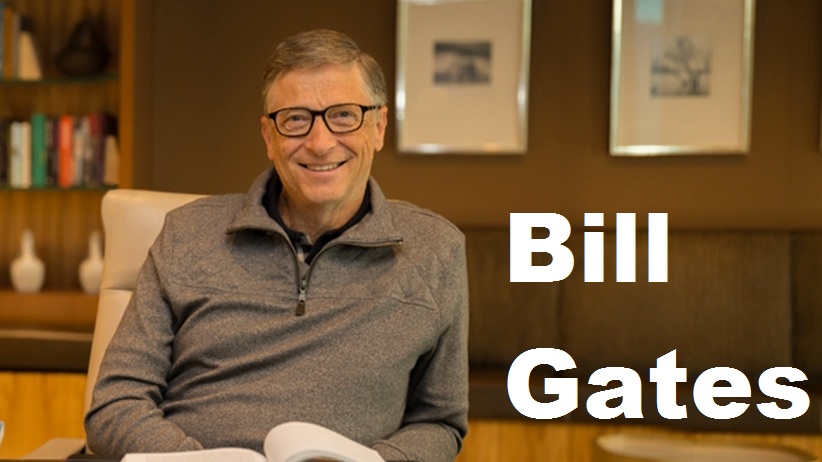
Let’s turn to another outlier whose history Gladwell ties to the 10,000 hour rule along with the gifts of opportunity and legacy: Bill Gates. Gates undoubtedly towers above Joy in fame. But both share a common thread that run through their stories. Bill Gates too, started out as a brilliant, young maths wizkid. Then, he dropped out of Harvard, founded Microsoft with his pal, Paul Allen, and through sheer brilliance, vision and plucks built Microsoft into a multinational software organisation from the scratch and went on to become a world richest man. Wow! Now, those are lines you probably must have become bored with. But, let’s scratch below the surface of Gate’s history and see if those lines fit well into the underlining factors of this outlier’s resounding success.

Let’s turn to another outlier whose history Gladwell ties to the 10,000 hour rule along with the gifts of opportunity and legacy: Bill Gates. Gates undoubtedly towers above Joy in fame. But both share a common thread that run through their stories. Bill Gates too, started out as a brilliant, young maths wizkid. Then, he dropped out of Harvard, founded Microsoft with his pal, Paul Allen, and through sheer brilliance, vision and plucks built Microsoft into a multinational software organisation from the scratch and went on to become a world richest man. Wow! Now, those are lines you probably must have become bored with. But, let’s scratch below the surface of Gate’s history and see if those lines fit well into the underlining factors of this outlier’s resounding success.
‘’Gate’s father was a wealthy lawyer in Seattle, and his mother was
the daughter of a well-to-do banker’’, says Gladwell. Just like Joy, Gates had
stream of opportunities lined up ahead. He was taken out of public school and sent
to a private school that catered to Seattle’s elite families. There midway
through his second year, the school started a computer club that was sponsored
by the mother’s club. This was 1968 and most colleges did not even have a
computer in those days. But here is a high school with a state-of-the-art
computer facility.
Amazingly, the type of computer installed in that high
school club was what was called ASR-33 Teletype – a time sharing terminal with
direct link to a mainframe computer. This was totally different and a world
apart from the computer Bill Joy used which was a far more laborious means of
learning programming back in those days. Now, while Bill Joy learned programming
by time sharing system right in 1971 as a sixteen year old freshman at the
University of Michigan, Bill Gates was
already learning programming via real time
as an eighth grader back in 1968. Gates lived virtually in the computer
room from that moment onwards. But buying time on the mainframe computer was
expensive. Thanks to the Mother’s Club who put up 3,000 Dollars. When that amount
of money ran out, the parents raised more money. Again the students spent it.
At the time a group of programmers at the University of Washington formed the Computer Centre Corporation (C-Cubed) which leased computer time to local companies. Fortunately for Gates, a student in his school happened to be the son of one of the founders of C-Cubed. Monique Rona, the parent of the boy wondered if the Lakeside School (Gates’ school) computer club would like to test out C-Cubed’s software programme on the weekends in exchange for free programming time.
Gates jumped at the offer. He would take the bus after
school to the C-Cubed office and programmed long into the evening. Well, eventually
C-Cubed went bankrupt and Gates started hanging around with his friends near
the computer centre of the University of Washington. Before long, a door of opportunity opened at
the Information Science Incorporation (ISI). ISI agreed to let them have free
computer time in exchange for working on a piece of software that could be used
to automate company payrolls.
‘’It was my obsession’’, Gates said. ‘’I skipped athletics. I
went up there at night...it would be a rare week that we wouldn’t get twenty or
thirty hours in. There was a period when Paul Allen and I got in trouble for
stealing a bunch of passwords and crashing the system. We got kicked
out....This is when I was fifteen and sixteen. Then I found out Paul had found
a computer that was free at the University of Washington. They had this machine
in the medical centre and the physics department. They were on twenty-four-
hour schedule, but with this big black period, so that between three and six in
the morning, they never scheduled anything. I’d leave at night after my
bedtime. I could walk up to the University of Washington from my house or I’d
take the bus. That’s why I’m always so generous to the University of
Washington, because they let me steal so much computer time.’’ Gates narrated.
Again, fortune smiled on Bill Gates when one of the founders of ISI, Bud Pemboke was called from TWR, a technology company which had just signed a contract to set up a computer system at Bonneville Power Station in Southern Washington. Programmer familiar with the particular software the power station used was desperately needed. This was the early days of the computer revolution and programmers with that king of specialized experience were difficult to find. But Pemboke knew that those high school kids from Lakeside who have being running up thousands of hours of computer time on their mainframe would perfectly foot the bill. Bill Gates and his friends were contacted. Gates was now in his senior year and somehow managed to convince his teachers to let him decamp for Bronneville under the guise of an independent study project. There under the supervision of John Norton, and with Norton’s help he wrote codes.

Gates, as it turned out was presented with even greater
opportunities than Bill Joy. When Gates started programming at an even younger
age-three years before Joy, Joy probably don’t even know what programming or
computer was. So by the time Gates dropped out of Harvard, he had already put
in hours and hours non-stop, programming for at least seven consecutive years. He
was able to pay the 10,000 hour price. How many kids in the world back in the
1960s and 1970s had so much opportunities such as were piled on each other
along both Joy’s and Gates’ ways? As the saying goes, ‘’Luck is when
preparation meet opportunity.
Subscribe to:
Posts (Atom)
STEPS TO BUSINESS PLANNING by Matthew Ujah-Peter
To put a good business plan together, there are steps that must be taken. These are preliminary activities that will help you organize you...
-
By Grace Ogot (Please note that this short story by Grace Ogot has been further shortened for our r eaders) The atmosphere in the vi...
-
To put a good business plan together, there are steps that must be taken. These are preliminary activities that will help you organize you...
-
In addition to the last 15 tips for people who are aspiring and planning to venture into starting business of their own, below are addit...